
Choosing an Exhibition Fabricator: A Dubai Agency Guide
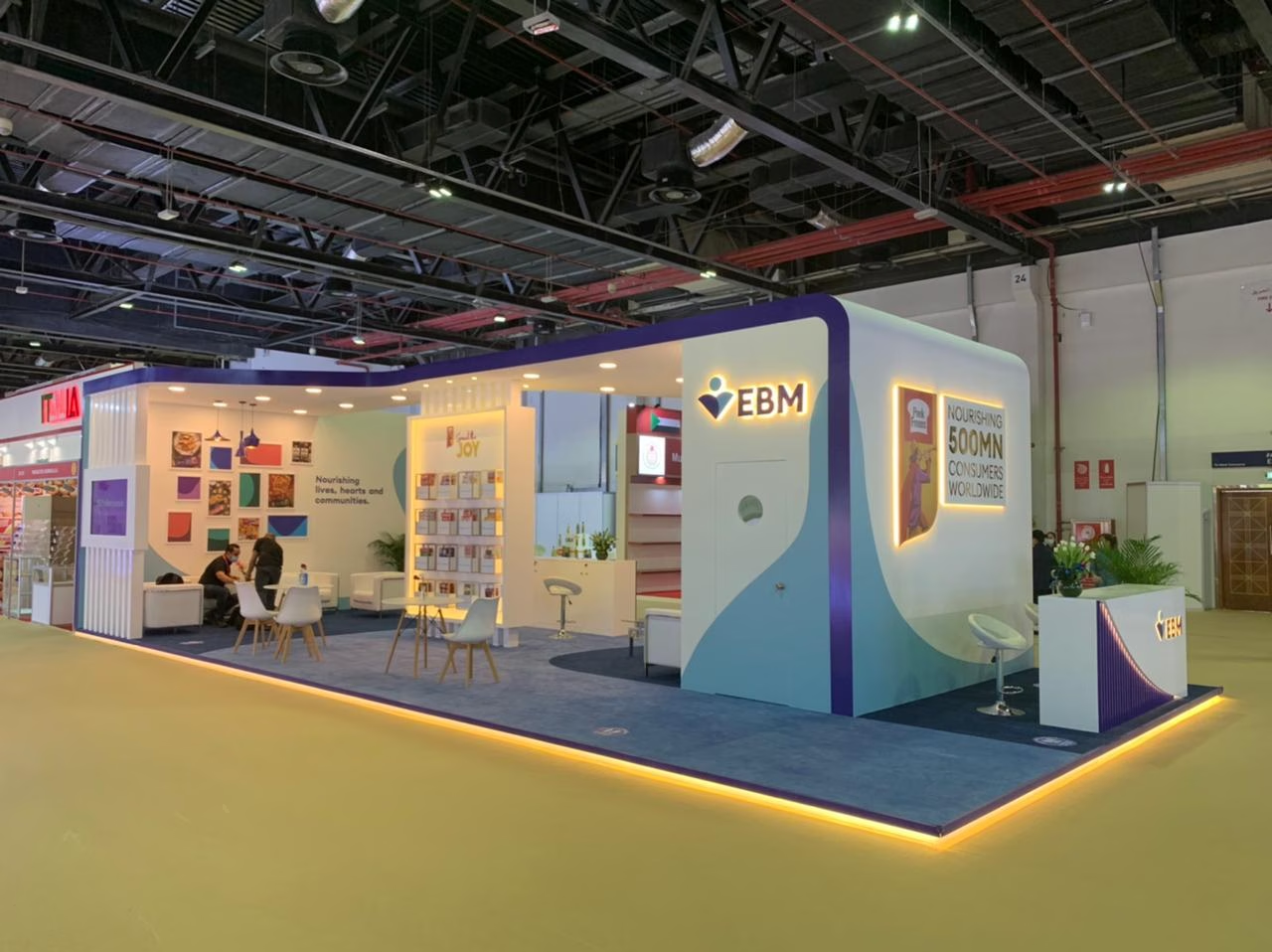
The Difference Between a Contractor and a Production Partner
Most exhibition stand companies in Dubai operate as contractors. They take your brief, outsource the fabrication to a third-party workshop, manage the logistics themselves, and hand over the finished stand on installation day. When it works, it works. When it doesn’t, and the reason it doesn’t is sitting in a workshop in Sharjah that nobody told you about, you find out on-site. A production partner is structurally different. Design, fabrication, finishing, and installation happen under one roof, managed by one team, with one point of accountability. When you call about a change at 9pm the night before installation, there is someone in the building who can actually act on it.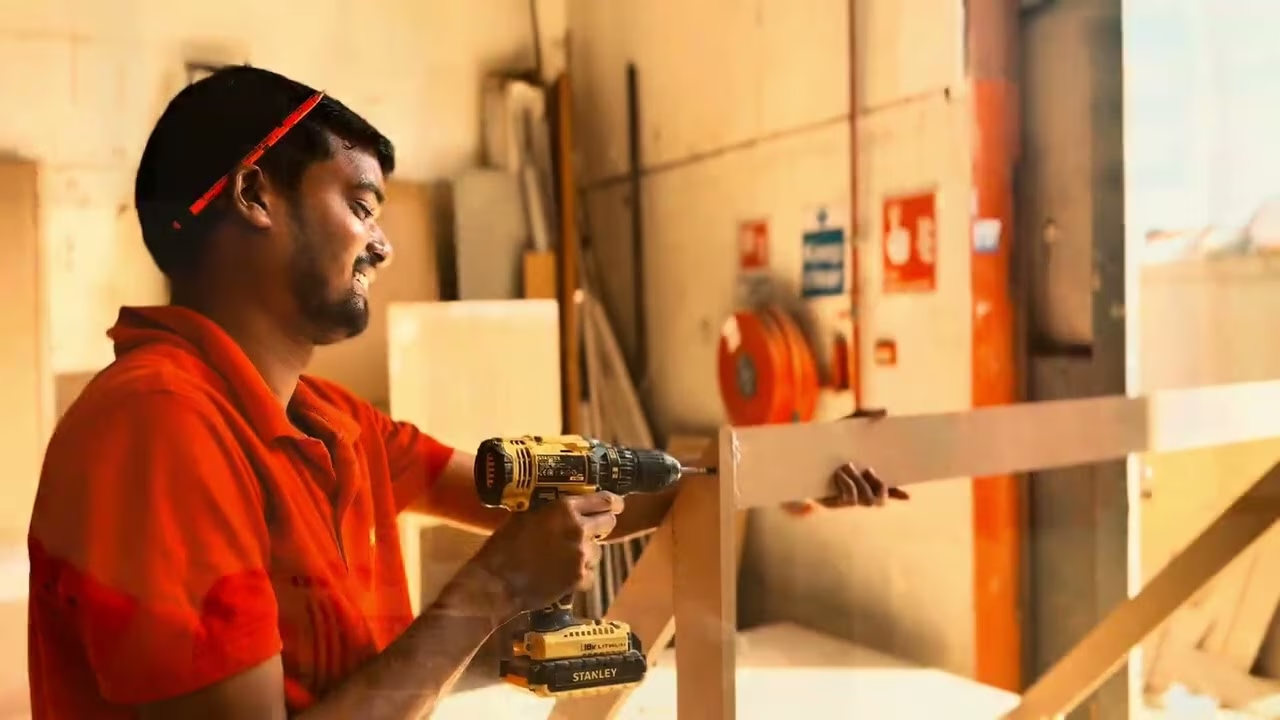
What Agencies Actually Need From a Fabricator
When a brand commissions an exhibition stand directly, their primary concern is the end result: does it look good, does it work, was it on time. Agency project managers have a different set of requirements because they are managing two relationships simultaneously: one with the fabricator and one with the client. Brand fidelity over everything. Your client has a brand book. Pantone references, logo clear space rules, typography guidelines, approved photography. The fabricator’s job is not to interpret the brand. It is to execute it precisely. This sounds obvious. In practice, it means your fabricator needs to be able to read and build from a proper brand brief, not just a mood board. Process compatibility. Agencies work in rounds of approval. A brief goes out, a 3D render comes back, the client has comments, revisions are made, the client’s regional marketing director weighs in, there are more revisions. A fabricator who isn’t built for this process becomes a friction point that slows down your agency’s timeline and strains the client relationship. Single point of contact. You cannot be managing four different suppliers: the stand company, their carpenter, their printer, their logistics team, while also managing your client. You need one person at the fabricator who owns the entire project and gives you accurate information when you ask for it. Certainty on installation day. You are not on-site to manage problems. You are on-site to be with your client. That only works if you are confident the stand is going in correctly, on schedule, without calls from the installation crew asking questions nobody planned for.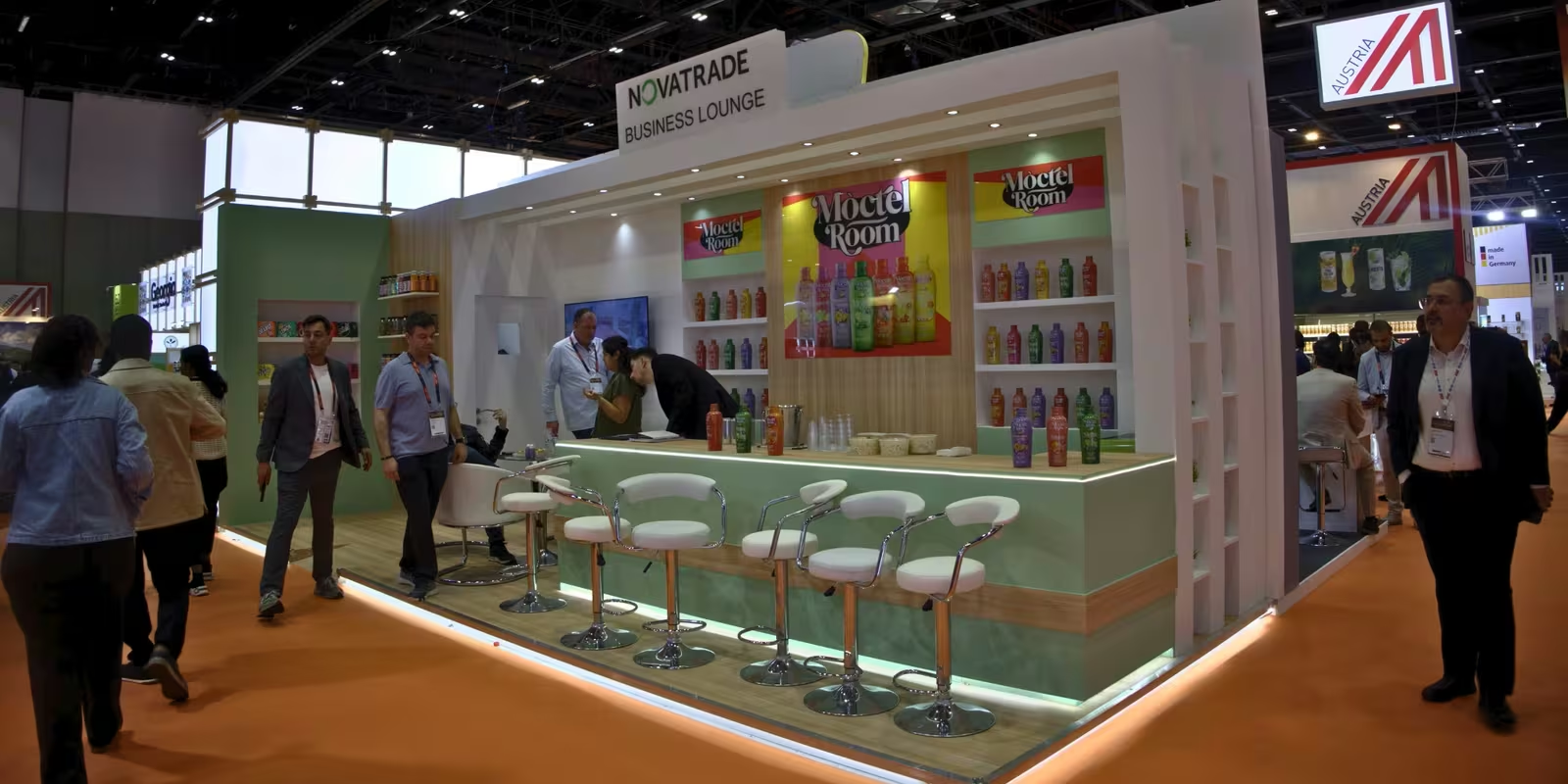
In-House Fabrication: Why It Matters Specifically for Agency Work
The outsourcing problem is not a quality problem. It is an accountability problem. When a stand company outsources fabrication, the chain of information between your brief and the finished product passes through multiple hands. Each handoff is a point where something can be misunderstood, deprioritised, or cut to hit a margin. By the time the stand arrives on-site, the people who built it have never spoken to you and have no stake in whether your client is happy. In-house fabrication collapses that chain. The 3D designer who showed you the render knows exactly what the brand requires. The carpenter building the counter knows it. The painter matching the Pantone knows it. When you have a query or a last-minute change, the answer comes from someone who is actually working on your stand, not from an account manager relaying information to a supplier they’re also trying to manage. For agencies, this translates into one thing: confidence in what you’re going to see on installation day.
Venue Approvals: The Detail That Derails Agency Projects
Dubai’s major exhibition venues, Dubai World Trade Centre and ADNEC in Abu Dhabi, operate formal contractor approval systems. Not every fabricator in the market is approved to work at both venues. For an agency commissioning a stand for a client at GITEX, Arab Health, Gulfood, or Cityscape, working with a non-approved contractor means your stand may clear all internal approvals and then face venue-level compliance issues that nobody anticipated. New Royal is an approved contractor at both DWTC and ADNEC. The technical drawings, structural calculations, and permit applications that venues require are handled as part of the project, not as extras that surface late in the process.For a detailed breakdown of what DWTC and ADNEC each require from stand contractors, see our DWTC & ADNEC Exhibition Compliance Guide, useful to share with clients who are exhibiting at these venues for the first time.
The Brief-to-Build Process for Agency Partnerships
The way a successful agency-fabricator relationship works in practice looks like this:Stage 1: Brief Submission
The agency provides brand guidelines, stand dimensions, venue and event details, functional requirements (meeting areas, product display, sampling zones, AV integration), and campaign-specific messaging. The more complete the brief, the fewer revision rounds required.Stage 2: 3D Concept Development
The fabricator’s design team produces rendered visuals for agency review. This is the round where brand alignment is confirmed, not during fabrication. Changes at design stage cost time. Changes during fabrication cost time and money.Stage 3: Client Approval
The agency presents renders to the client. Feedback comes back. Revisions are made. This round may happen more than once depending on the client’s internal approval process. A fabricator experienced in agency work builds this into the project timeline. It is not a surprise.Stage 4: Production
Once the design is signed off, fabrication begins. For custom builds, allow 2–4 weeks depending on complexity. For activations with complex structural or special material requirements, GRP, large-format 3D elements, integrated LED systems, allow more.Stage 5: Pre-Delivery Review
Before anything goes on a truck, the stand is assembled in the fabrication facility for a quality check. For agency clients, this stage provides the option for a preview visit, bringing the client or the agency’s creative director to see the build before it reaches the venue.
Stage 6: Installation
The fabricator’s team handles on-site installation, working within the venue’s contractor hours and regulations. For DWTC and ADNEC, this includes managing contractor badge requirements, loading bay scheduling, and sign-off from the venue’s technical team.Activations Beyond the Exhibition Hall
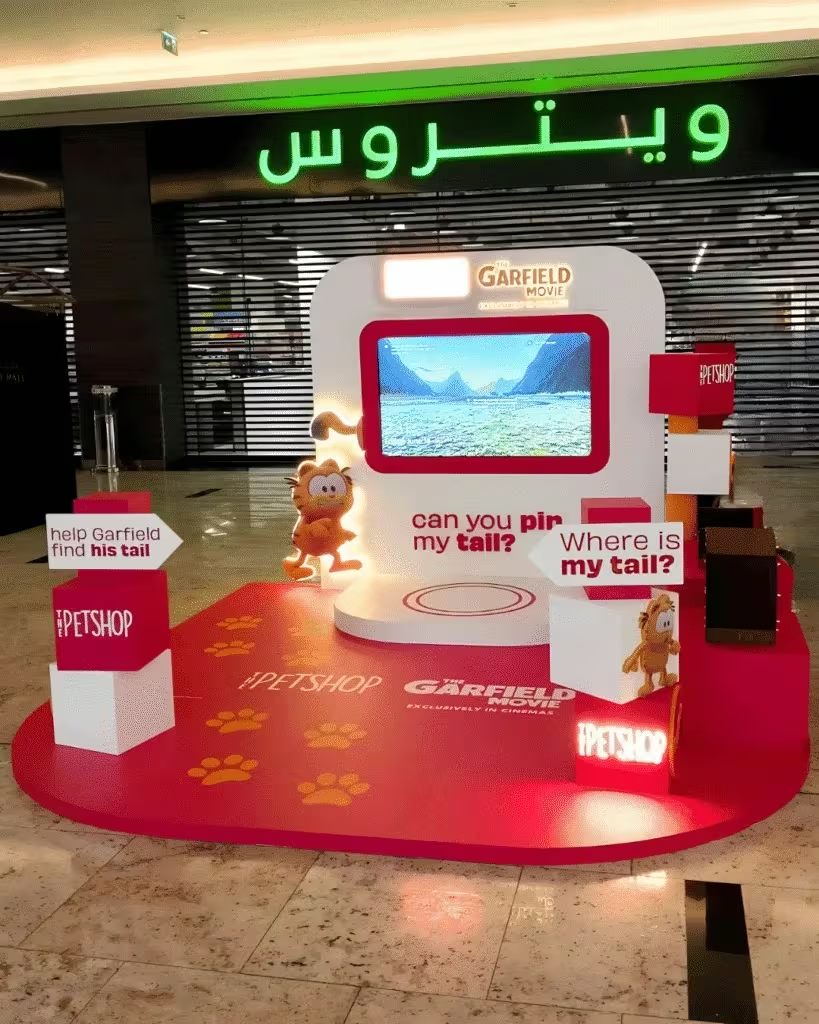
Agency briefs are not always limited to trade show stands. Brand activation work, retail takeovers, outdoor events, mall activations, product launch structures, requires the same production capabilities with a different set of structural and logistical demands. When PepsiCo needed a life-size 3D can structure for an outdoor Pepsi Zero brand activation in Dubai, the brief required a structure that would dominate event spaces, include functional sampling zones, survive outdoor conditions, and be installed within a single day. The finished structure was fabricated using GRP, steel, and acrylic with integrated LED lighting for evening visibility, all produced in-house and installed in one day.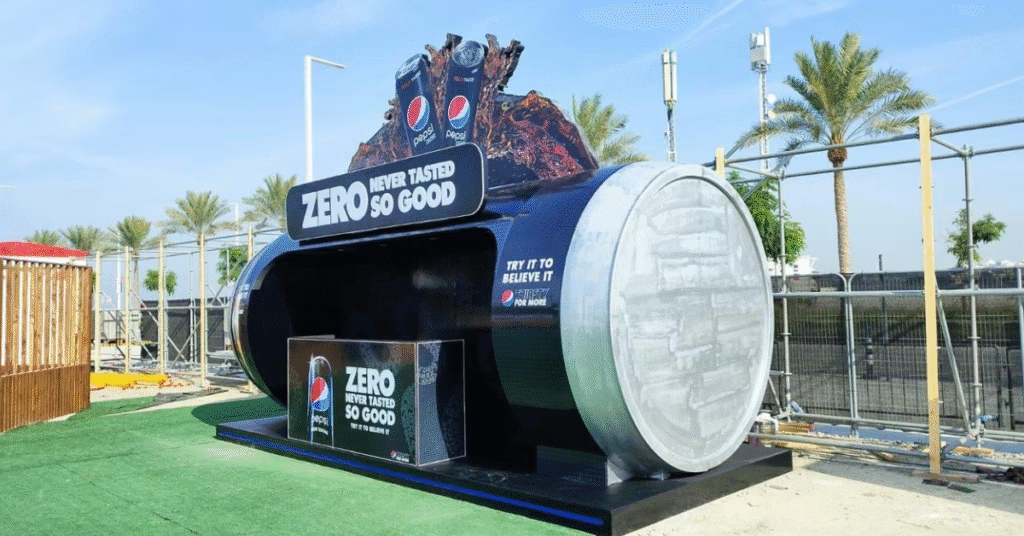
See the full Pepsi Zero activation case study: brief, build process, materials, and installation timeline.
Repeat Client Campaigns: Storage and Reinstallation
Some of your clients exhibit once a year. Others exhibit three or four times. For brands with an active UAE exhibition calendar, the question of what happens to the stand between shows is a practical one that most agencies don’t raise until the first show ends and the stand is sitting in a loading bay. New Royal offers storage and reinstallation as part of the client relationship. After dismantling, stand components are stored at the Al Quoz facility, inventoried, and prepared for the next deployment. When the next event comes around, the stand goes back out, reinstalled, freshened where needed, with no need to rebid the project from scratch. For agencies, this arrangement has two practical benefits. First, it keeps your client’s exhibition asset in the hands of the team who built it, which removes reinstallation risk. Second, it simplifies your own project management. The next brief goes to a team that already knows the brand, the stand, and the client’s expectations.To understand the full cost of exhibiting across multiple events in Dubai, see our Complete 2026 Exhibiting in Dubai Budget Guide, a useful resource to share with clients planning their annual exhibition calendar.
What to Ask When Evaluating a Fabricator for Agency Work
Before commissioning a stand build on behalf of a client, get clear answers on the following:- Is fabrication in-house or outsourced? Ask specifically. “We have production capabilities” can mean anything. You want to know whether the people you brief are the same people building the stand.
- Are you an approved contractor at the venue? For DWTC and ADNEC specifically. If the event is at a different venue, ask whether they’ve worked there before and how they handle venue compliance.
- What is your revision process during design stage? How many rounds are included? What happens if the client requests structural changes after sign-off?
- Can we do a pre-delivery review? Any fabricator confident in their work will say yes.
- What is your realistic lead time for this scope? Not the minimum possible, the actual timeline. Agencies are often given ambitious timelines by clients. You need accurate information, not what the fabricator thinks you want to hear.
- What happens if something is damaged on installation day? In-house fabricators with their own team on-site can fix things. Contractors who outsourced the build have limited options.
Frequently Asked Questions
Can you work directly with our client’s brand team as well as with us as the agency?
Yes. Depending on the agency’s preference, we can communicate directly with the client’s marketing or brand team for approvals, or route all communication through the agency. We follow the structure you set from the start of the project.Do you sign NDAs or confidentiality agreements for agency work?
Yes. For agencies managing campaigns for major brands, we operate under full confidentiality on project details, client identity, and brand information.Can you handle multiple clients exhibiting at the same show?
Yes. Concurrent project management for multiple stands at the same event is part of how we operate, particularly during peak season when GITEX, Cityscape, and major sector shows overlap on the calendar.What file formats do you accept for brand assets?
We work from AI, EPS, PDF (print-ready), and PSD files. For 3D integration, we align with your design team on file compatibility at the brief stage.How far in advance should we brief you for a major custom build?
For a standard custom stand up to 36sqm, allow 4–6 weeks from signed brief to installation. For large or structurally complex builds: double-deck, large-format 3D elements, multi-zone activations, allow 8–10 weeks. For peak season events such as GITEX and Arab Health, add two weeks to any estimate.Do you provide photography of the finished stand for our client reports?
We can arrange professional photography of the finished installed stand before the show opens. For agencies preparing post-event client reports, this gives you a clean, properly lit record of the delivered work.Work With a Fabricator Your Agency Can Rely On
- See how we handle complex brand activations →
- Check venue compliance requirements for your next event →
- View our custom exhibition stand services →
New Royal Advertising LLC is an approved exhibition stand fabricator at DWTC and ADNEC, operating from our own in-house production facility in Al Quoz, Dubai. We work directly with brands and as a production partner for marketing and event agencies across the UAE.
Meet the People Behind Your Project.
A great design is nothing without a great team to build it. Watch how our carpenters, painters, and engineers work together to turn your vision into reality right here in Dubai.