
What a Custom Kiosk Really Costs in Dubai: Materials, Hardware, and Longevity
Quick answer: A custom mall kiosk in Dubai runs AED 45,000 to AED 120,000. Every kiosk we build uses a Corian countertop, a stainless steel pylon, and high-quality German hinges and drawer hardware as standard, so none of those move the price. What actually swings the cost is the cabinet body material (laminate or veneer), the finish level, and whether the unit needs integrated equipment like screens, dispensers, or chillers. A kiosk isn’t a one-show exhibition stand. It opens and closes hundreds of times a week for years, which is exactly why we treat a durable countertop and real hardware as the baseline, not an upsell.
Cost by Kiosk Build Tier
| Tier | Starts From (AED) | Cabinet Body | Standard on Every Tier |
|---|---|---|---|
| Essential | 45,000 | Laminate | Corian countertop, German hinges, stainless steel pylon |
| Premium | 75,000 | Veneer | Corian countertop, German hinges, stainless steel pylon, backlit branding |
| Elite | 120,000 | Veneer, premium finishes | Corian countertop, German hinges, stainless steel pylon, backlit branding, integrated equipment |
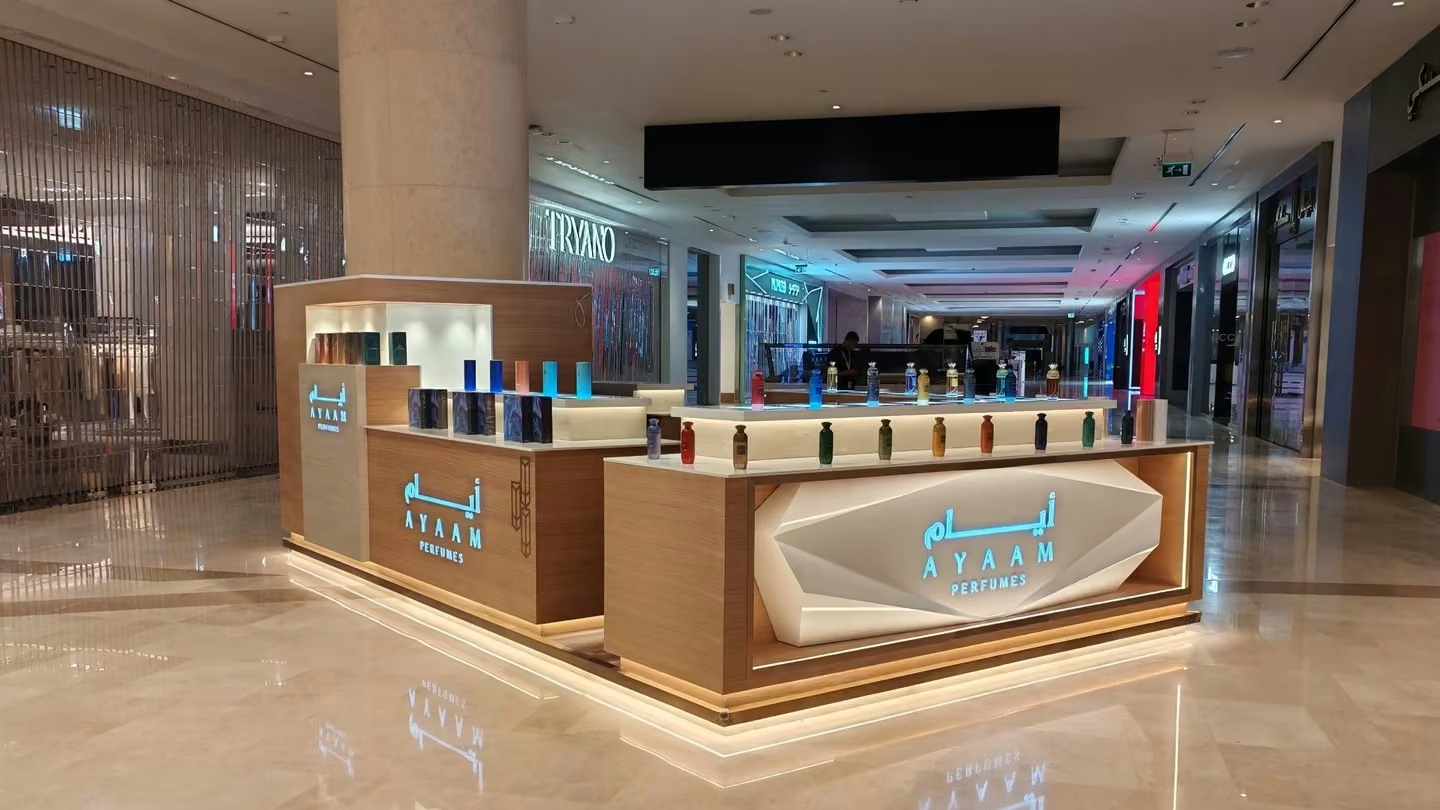
Every tier includes a Corian countertop, a stainless steel pylon for the branding tower, and German-engineered hinges and drawer hardware, we fit Hettich and Häfele, as standard. None of those three are a tier upgrade. What actually separates the tiers is the cabinet body material, the finish level, and whether the kiosk needs integrated equipment.
Why Materials and Hardware Move the Price More Than Size
Two kiosks at the same footprint can land AED 40,000 apart, and it’s rarely the countertop or the hinges causing that gap, since we build every kiosk with a Corian countertop and German hardware regardless of budget. The swing factor is the cabinet body, laminate or veneer, the finish level, and whether the unit needs integrated equipment like screens, dispensers, or chillers. A kiosk isn’t judged once at handover. It’s judged every day it’s still standing in the mall looking as good as day one.
Cabinet Body: Laminate vs Veneer
Laminate
The entry-level cabinet finish, used on our Essential tier. Durable enough for a lower-traffic unit, but it chips at the edges and the seams show over time under daily handling.
Veneer
A thin layer of real wood over an engineered core, used from Premium tier up. It gives a kiosk the warmth and grain of solid timber at a fraction of the weight and cost of solid wood. It needs a proper sealed finish to handle mall humidity and daily cleaning, which is where cheaper builds cut corners and the veneer lifts within a year.
Corian Countertops: Standard on Every Kiosk We Build
Every kiosk we build gets a Corian countertop, regardless of tier or budget, and on most mall specs that Corian carries through to the skirting and the perimeter edge flooring too, not just the surface you see. It’s non-porous, seamless, and resistant to heat, scratches, and staining, and unlike laminate, surface damage can be sanded out rather than requiring a full panel replacement. Every material sample we submit for mall approval goes through a scratch test before it’s signed off, so durability isn’t a claim, it’s a condition of getting the kiosk approved in the first place. We don’t offer a laminate counter as a cost-cutting option on any tier, because the counter is the single most-touched surface on the kiosk, and it’s not worth the callback risk to save cost there.
Stainless Steel: Every Pylon, Every Tier
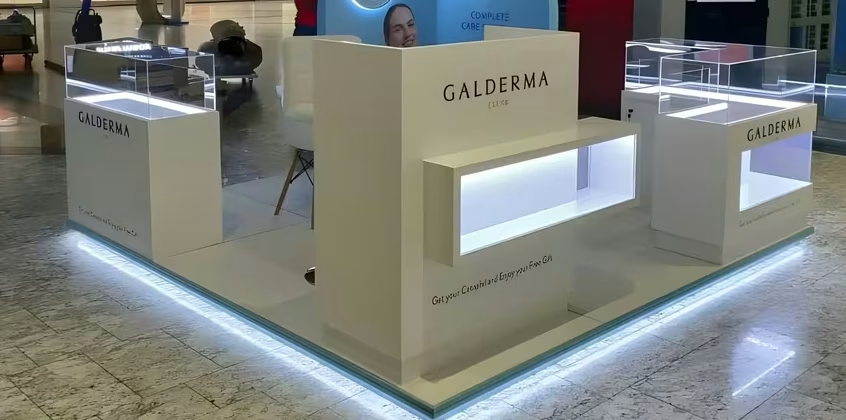
Every pylon we build, the branding tower that carries your logo above the counter, is a powder-coated tubular steel structure rather than the cabinet’s laminate or veneer. It’s the one structural element that has to stay rigid, corrosion-resistant, and dead straight for years under mall air conditioning and daily cleaning, and it’s what an illuminated sign box or backlit logo actually mounts to. Standard across all three build tiers, not a premium upgrade.
Hardware: Why Every Kiosk Gets German Hinges
Nobody asks about hinges in a design meeting. Everybody notices when a storage door starts sagging six months into trading. A mall kiosk’s cabinet doors and drawers open and close dozens of times a day, every day, for years, and that’s a hardware question long before it’s a carpentry question. We fit concealed, German-engineered soft-close hinges and drawer runners, specifically Hettich and Häfele, on every kiosk we build, not just the higher tiers, because they’re rated for that duty cycle and standard hardware isn’t. Most mall specs also require every storage area to be fully enclosed with concealed hinges and finger pulls, no exposed handles or knobs, so the hardware has to be good enough to work invisibly.
This is also where a subcontracted build tends to show its seams first. A manufacturer building everything in-house specs and fits the hardware themselves; one that hands fabrication to whoever has capacity that month usually doesn’t control what hinges show up on the finished unit.
Why the Extra Spend Pays Back Over the Kiosk’s Life
A kiosk isn’t built for one show and stored. Unlike an exhibition stand’s 1-3 show lifecycle, a mall kiosk is meant to trade for years in the same spot. Every callout for a sagging door, a chipped counter, or a hinge replacement costs mall downtime as well as the repair bill, and downtime on a live retail unit costs more than the repair itself. Building every kiosk on a Corian countertop and German hardware from the Essential tier up is how we keep those callouts rare over the three-to-five-year life most operators expect from a permanent kiosk. It’s also why every kiosk we build comes with a free 1-year warranty on workmanship and materials. We’re covering the build because we’ve already priced in the durability.
How a Mall Kiosk Build Actually Unfolds
The materials and hardware decisions above happen inside a longer approval chain most first-time kiosk owners don’t see coming. On a recent Mall of the Emirates kiosk we delivered, the sequence ran like this:
- Design and structural drawings submitted for mall review, including MEP layout.
- Physical material samples reviewed and approved, including a dedicated sign-off on the pylon and cladding sample before it was cleared for fabrication.
- Contractor’s all-risk insurance and pre-mobilization paperwork filed and paid, VAT included.
- Final architectural inspection on site, checking the build against the approved drawings before install is cleared.
- Kiosk trade permit issued by the mall.
- Installation, typically overnight after mall hours to avoid disrupting trading.
- Post-install snag list and rectification before the unit is fully signed off.
On that build, material samples cleared within the first two weeks, insurance and the architectural inspection cleared in the two weeks after that, and the kiosk was installed and trading within roughly a month of final design sign-off, in line with standard mall timelines. Every stage runs through the mall’s own portal and approval chain, which is exactly why we manage the submissions ourselves rather than leaving a first-time tenant to navigate it alone.
Frequently Asked Questions
Do you offer a warranty on the kiosk?
Yes. Every kiosk we build comes with a free 1-year warranty covering workmanship and materials, on top of the Corian, concealed German hinges, and powder-coated steel pylon construction described above.
Why do you use Corian on every kiosk instead of offering a cheaper laminate counter?
The countertop is the most-touched surface on any kiosk, and laminate shows wear there fastest. Corian resists heat, scratches, and staining, and damage can be sanded out rather than forcing a panel replacement. It’s cheap enough relative to the whole build that we don’t offer a laminate downgrade on any tier.
Do all your kiosks come with German hinges?
Yes, on every kiosk we build, regardless of tier. We fit Hettich and Häfele hinges and drawer hardware as standard because a kiosk’s doors and drawers see heavy daily use for years, and standard hardware isn’t rated for that duty cycle.
How long should a mall kiosk last before it needs replacing?
A well-specified kiosk should hold up for three to five years of daily trading with normal maintenance. Builds that cut corners on the countertop or hardware tend to need visible repairs well before that.
Can I mix materials to manage budget?
Yes. Every kiosk already comes with a Corian countertop, German hardware, and a stainless steel pylon as standard, so the main budget lever is the cabinet body: laminate keeps you at the Essential tier from AED 45,000, veneer moves you into Premium from AED 75,000.
Ready to price your kiosk? Send your brief through the kiosk design and fabrication page or call +971 56 422 0364. You get a free 3D design with the quote.